
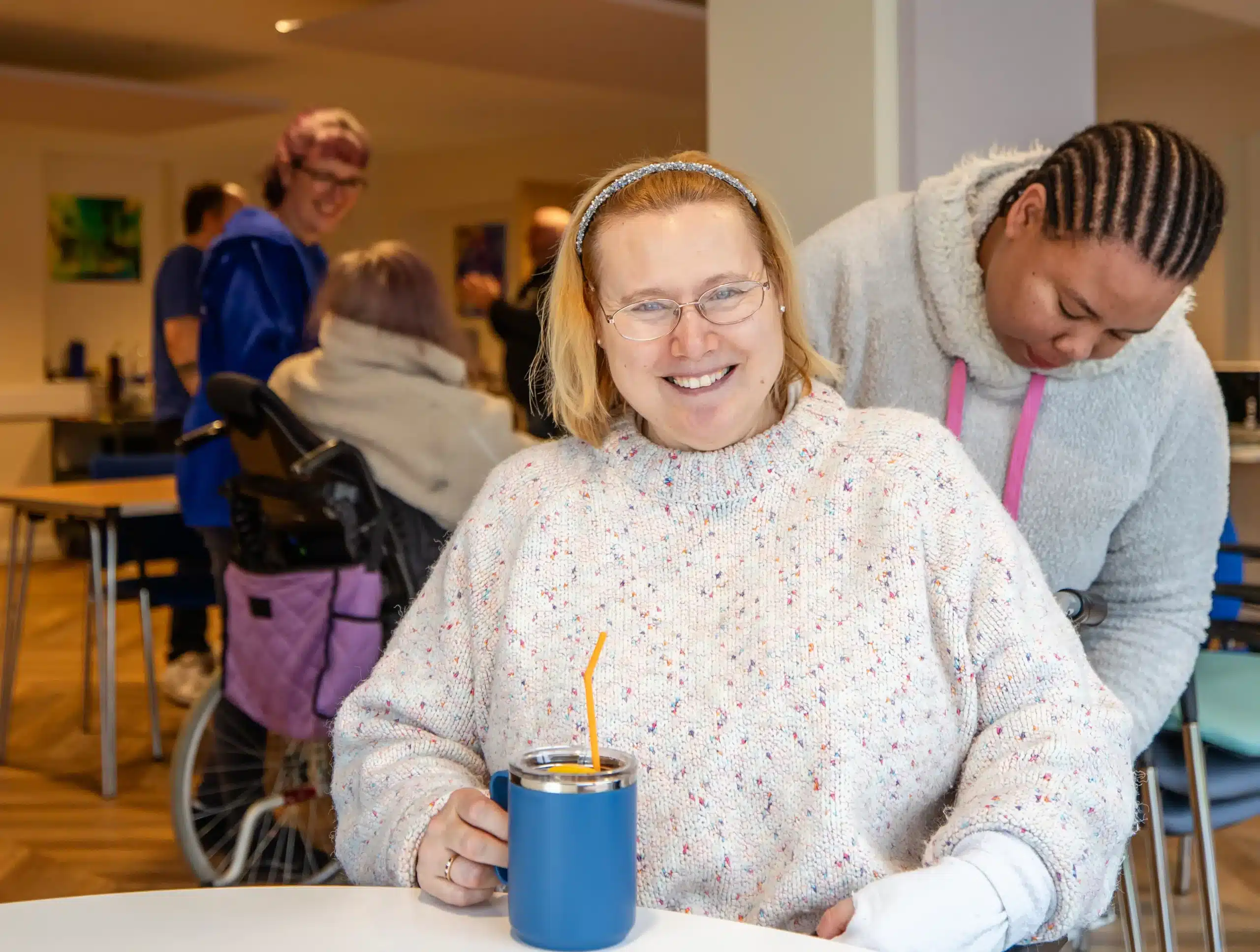
At Paul’s Place, disabled adults find more than support — they find a community where their experiences matter, their voices are heard, and their individuality is celebrated.
Through the “What do you want to learn today?” series, members share honest reflections on life as a disabled person, highlighting both challenges and triumphs.
Matt puts it simply: “I want to be seen as no different as the average person.
“Sue echoes this sentiment, emphasizing dignity and recognition: “Everyone should be treated respectfully. I have got a brain. I would like respect for who I am.”
These voices remind us that inclusion is as much about social recognition as physical accessibility.
Yet everyday interactions can be difficult. Rebecca remembers feeling overlooked when people speak to her carer instead of her: “It makes you feel invisible.” And sometimes, invisibility is even more painful.
Paul and Zak share: “That one time I did feel invisible, I was treated like an annoyance. Like I shouldn’t be here.” Being seen and acknowledged matters — it shapes confidence, self-worth, and belonging.
Not all disabilities are visible. Martyn, living with a brain injury, says: “Because I’ve got a brain injury, people can’t see it.” For him and others with invisible conditions, patience, understanding, and empathy are essential. For those with acquired disabilities, adaptation is part of life. “I’ve acquired mine through an accident. I’ve had to change my lifestyle,” says Martyn.
During his recovery from a stroke, Paul recalls the importance of family support: “It was me and my dad helping each other.” Paul explains, “I think people just need to be patient. Disability is here to stay.”
While progress has been made, acceptance is ongoing. Zak sees hope in conversations about disability: “The fact that we are even talking about this now shows how much has changed.”
Yet Liz and Ben acknowledge the work still to be done. Liz observes, “I think there’s a long way to go for people to accept being disabled,” and Ben adds, “I think it’s going to be a long time before we’ve been truly accepted,”
For visually impaired members like Barrington, social uncertainty remains: “People don’t know how to approach the visually impaired.”
Amid these challenges, Paul’s Place provides a space where disabled adults are seen, heard, and empowered. Members like Rebecca, Paul, Matt, and Martyn find belonging and confidence in a community that values them for who they are — not defined by their disabilities.
These voices highlight a vital truth: true inclusion combines accessibility with empathy, recognition, and respect. It is about acknowledging both visible and invisible challenges, engaging directly, and fostering social understanding. Through Paul’s Place, disabled adults thrive, connect, and experience the dignity and respect everyone deserves.